|
|
Current MS Students
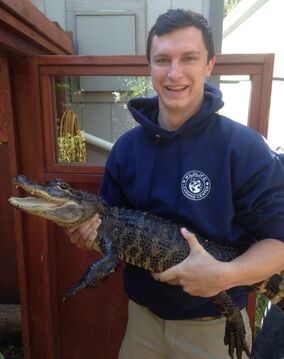
Matthew M. Dickson
A physiological and morphological assessment of rapid adaptive responses to climatic variation among introduced populations of Mediterranean House Geckos
|
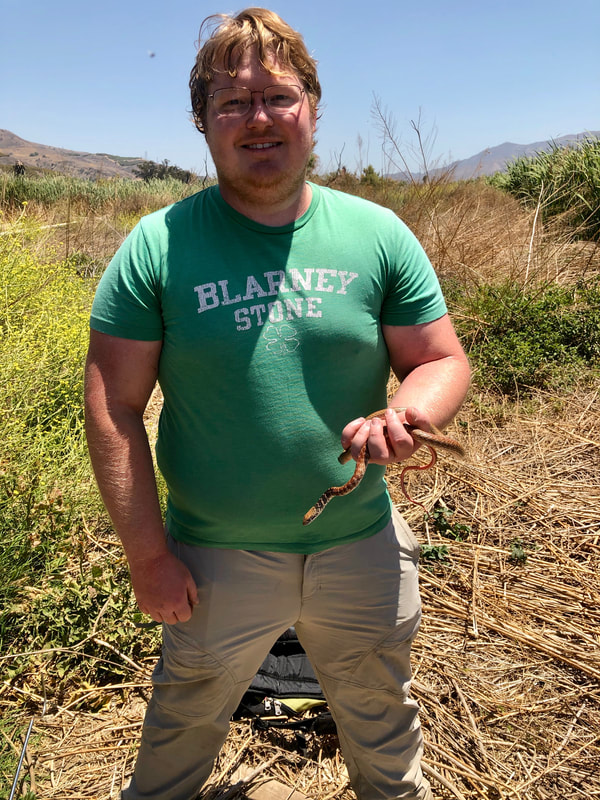
Sean P. Farmer
Does evaporative water loss limit the range of the paradoxically rare Common Garter Snake (Thamnophis sirtalis) in Southern California?
|
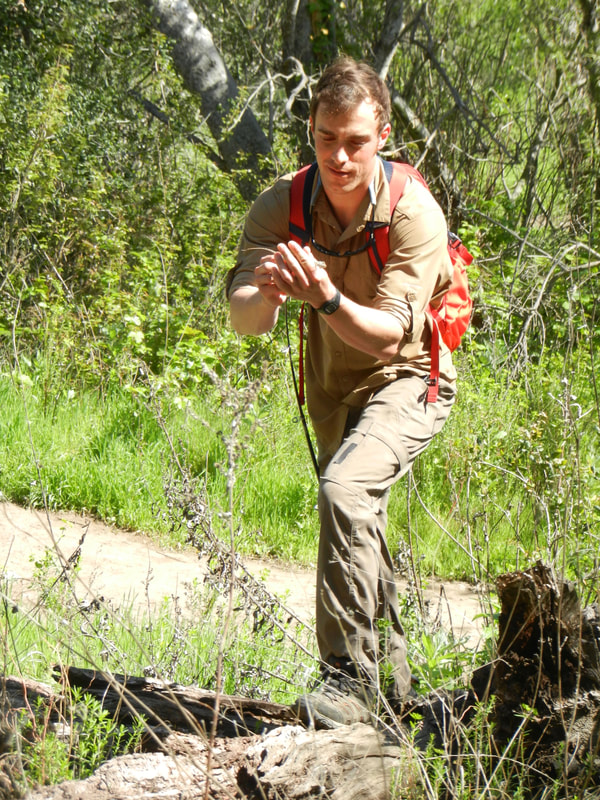
Trevor C. Ruppert
|
|
LICH Alumni
Juan H. Aragon y Traverso (MS 2021)
Widow wars: testing the mechanisms underlying invasion success of a globally invasive spider
Dillon J. Monroe (MS 2020)
Challenges to defining the niche of an invasive human-commensal gecko
Anthony J. Cobos (MS 2019)
A test of Gollum's rule: comparative morphology, performance, and energetics of cave- and forest-dwelling Malaysian Cyrtodactylus geckos
Rachel S. Rhymer (MS 2016)
Parents, predators, or poop? Testing the forces selecting for aggregation in a herbivorous lizard
Alissa N. [Luken] de Koning (MS 2015)
Evolution of temperature-dependent sprint performance in nocturnal and secondarily diurnal geckos
Jason R. Warner (MS 2015)
Comparative cold-hardiness capacities of South American lizards in the genus Liolaemus
Beck A. Wehrle (MS 2014)
Going green: the acquisition of fiber-fermenting microbes by hatchling Green Iguanas (Iguana iguana)
Denita M. Weeks (MS 2014)
Implications of global warming for the world's southernmost gecko
Raymond A. Hernandez (MS 2009)
Can omnivores be diet specialists? Adaptability of gut form and function in an omnivorous lizard
Diana L. Andres (MS 2005)
Consequences of diet switching for digestive function and the gut endosymbiont community for an herbivorous lizard
Jennifer R. [Weist] Lancaster (MS 2005)
Why do banded geckos band? Identifying the causes and benefits of diurnal aggregation in Coleonyx variegatus
Kamelia [Fallahpour] Algiers (MS 2004)
The role of female breeding coloration in the behavior and mate selection of male leopard lizards (Gambelia wislizenii)
Widow wars: testing the mechanisms underlying invasion success of a globally invasive spider
Dillon J. Monroe (MS 2020)
Challenges to defining the niche of an invasive human-commensal gecko
Anthony J. Cobos (MS 2019)
A test of Gollum's rule: comparative morphology, performance, and energetics of cave- and forest-dwelling Malaysian Cyrtodactylus geckos
Rachel S. Rhymer (MS 2016)
Parents, predators, or poop? Testing the forces selecting for aggregation in a herbivorous lizard
Alissa N. [Luken] de Koning (MS 2015)
Evolution of temperature-dependent sprint performance in nocturnal and secondarily diurnal geckos
Jason R. Warner (MS 2015)
Comparative cold-hardiness capacities of South American lizards in the genus Liolaemus
Beck A. Wehrle (MS 2014)
Going green: the acquisition of fiber-fermenting microbes by hatchling Green Iguanas (Iguana iguana)
Denita M. Weeks (MS 2014)
Implications of global warming for the world's southernmost gecko
Raymond A. Hernandez (MS 2009)
Can omnivores be diet specialists? Adaptability of gut form and function in an omnivorous lizard
Diana L. Andres (MS 2005)
Consequences of diet switching for digestive function and the gut endosymbiont community for an herbivorous lizard
Jennifer R. [Weist] Lancaster (MS 2005)
Why do banded geckos band? Identifying the causes and benefits of diurnal aggregation in Coleonyx variegatus
Kamelia [Fallahpour] Algiers (MS 2004)
The role of female breeding coloration in the behavior and mate selection of male leopard lizards (Gambelia wislizenii)